
 zakaz@net-server.com.ua




|
Quantity
|
Out of stock
|
||
|
|
|||
|
|
|||
Accessories for Metal Cable Trays
Accessories for metal cable trays are used for installation, connection, branching, and changing the direction of cable routes. Properly selected components make it possible to create a reliable cable support system adapted to the room layout, the number of cables, and the operating conditions.
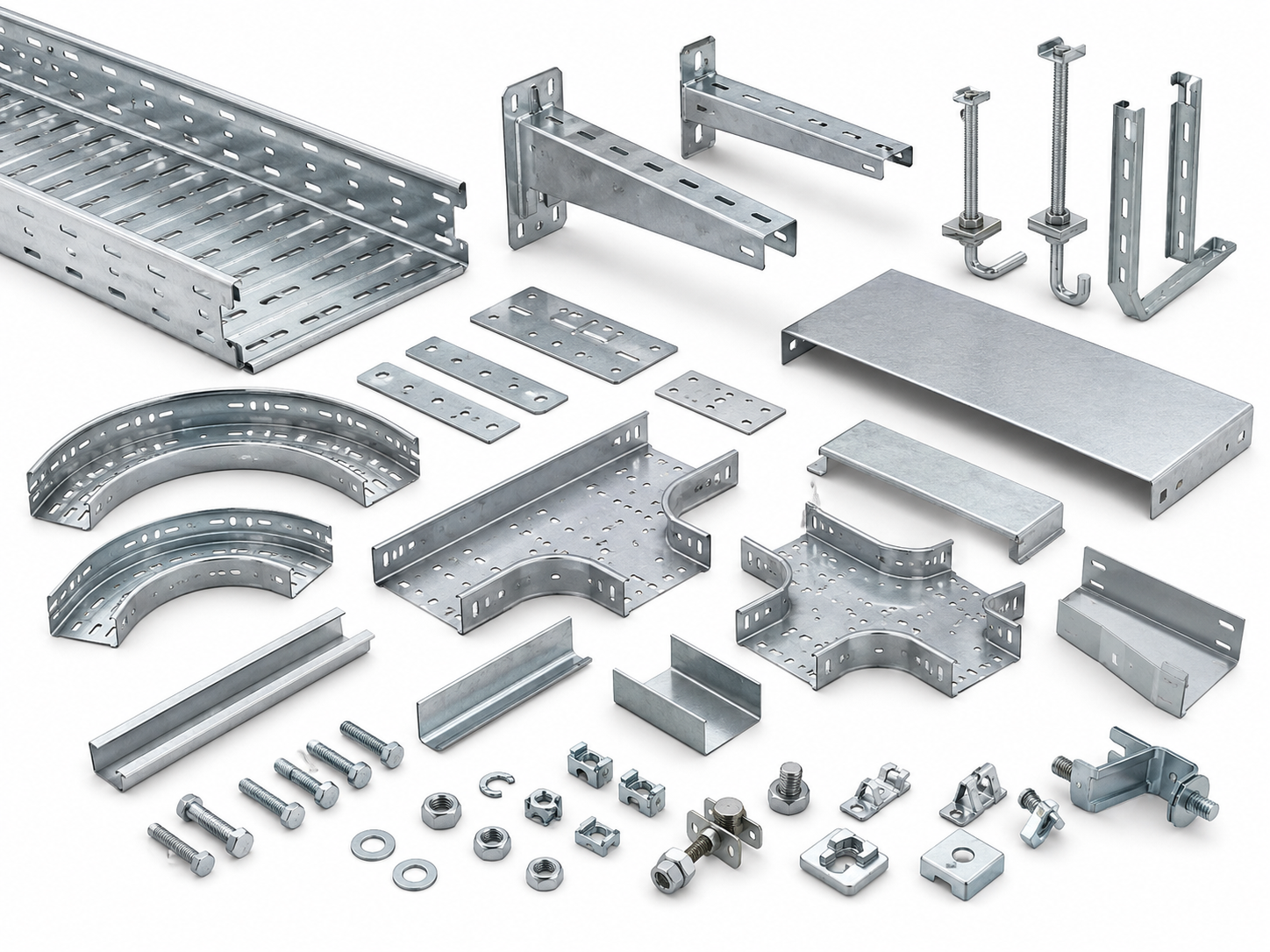
The catalog includes fasteners, connectors, support brackets, end caps, covers, bends, branch fittings, and other components for metal cable trays. These accessories are used when installing electrical, telecommunications, data, and low-voltage cable routes.
Types of Cable Tray Accessories
The choice of components depends on the cable tray type, its dimensions, installation method, and the configuration of the planned route. The main types of accessories include:
- Cable tray connectors — used to securely join straight tray sections into one continuous route.
- Brackets and cantilever supports — designed for mounting trays to walls, ceilings, mounting profiles, and other load-bearing structures.
- Hangers and mounting components — allow cable trays to be installed at the required height and used to create suspended routes.
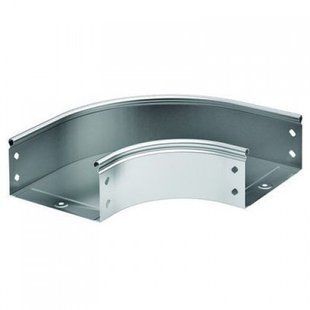
- Horizontal and vertical bends — used to change the direction of a cable route in the horizontal or vertical plane.
- Branch fittings, tees, and crosses — make it possible to create branches and connect additional sections of the route.
- Reducers and transition fittings — used to connect cable trays of different widths or heights.
- Cable tray covers — provide additional protection for cables against dust, dirt, and accidental mechanical impact.
- Covers for bends and branch fittings — close shaped sections of the cable route and help maintain the integrity of the system.
- End caps — installed on open tray ends to complete the cable route.
- Dividers and protective limiters — help separate cables with different purposes and keep them neatly arranged.
- Mounting fasteners — bolts, nuts, clamps, plates, and other elements required for assembling the cable support system.
How to Choose Components for a Metal Cable Tray
When selecting accessories, it is necessary to consider the cable tray series and type, its width, height, metal thickness, and protective coating. Even components intended for similar purposes may differ in dimensions, design, and installation method.
Particular attention should be paid to the following parameters:
- Accessory type. Selected according to the task: joining sections, turning, branching, rising, descending, or terminating the route.
- Tray size. The width and height of the accessory must correspond to the cable tray dimensions.
- Series compatibility. It is recommended to use trays and accessories from the same product series or verify their structural compatibility.
- Material and coating. The protective coating should be selected according to humidity, temperature, and the risk of corrosion.
- Permissible load. Brackets, cantilever supports, and hangers must be suitable for the total weight of the tray and installed cables.
- Installation method. The mounting location must be considered, including walls, ceilings, floors, mounting profiles, or suspended structures.
Properly selected accessories ensure accurate connection of all sections, structural stability, and convenient access to cables during maintenance.
Mounting Hardware for Metal Cable Trays
Cantilever supports, brackets, hangers, mounting profiles, clamps, and other types of mounting hardware are used to install cable routes. They allow trays to be secured to walls, ceilings, and dedicated load-bearing structures.
During the design stage, it is important to determine the correct spacing between supports and consider the combined weight of the tray and cables. The number and position of mounting points must comply with the installation conditions and the cable support system manufacturer’s recommendations.
Fittings for Building Cable Routes
Bends, elbows, tees, crosses, branch fittings, and reducers are used on complex sections of cable routes. They help route cables around columns, ventilation ducts, utility lines, and other structural elements of a building.
Using ready-made fittings simplifies installation and makes it possible to create a neat cable route without modifying straight tray sections manually.
Advantages of Using Compatible Accessories
- reliable connection of cable route components;
- convenient installation of straight and shaped sections;
- the ability to build routes of various configurations;
- stable cable support structure;
- cable protection at bends and branch points;
- convenient system maintenance and upgrading;
- a neat and professional cable route appearance.
Buy Accessories for Metal Cable Trays in Ukraine
At the Net-Server online store, you can buy accessories for metal cable trays, including fasteners, cantilever supports, connectors, covers, end caps, bends, branch fittings, reducers, and other components for cable route installation.
When ordering, pay attention to the product type, dimensions, material, protective coating, and compatibility with the selected tray series. If necessary, our specialists will help you select suitable components according to the cable system parameters and installation conditions. Orders are delivered throughout Ukraine.
Frequently Asked Questions
Are accessories from one manufacturer compatible with trays from another brand?
Not always. Even trays of the same width may differ in profile shape, mounting hole positions, and connection methods. The compatibility of the components should be checked before ordering.
Which accessories are required for a straight cable route?
A simple straight section usually requires section connectors, brackets or hangers, and mounting fasteners. Covers, dividers, and end caps may also be installed when required.
How do I select a cover for a cable tray?
The cover must match the tray width, type, and product series. Separate shaped covers of the appropriate form are used for bends, tees, and branch fittings.
What is the difference between a connector and a bracket?
A connector joins separate cable tray sections together, while a bracket or cantilever support holds the cable route on a wall, ceiling, or another load-bearing surface.