 zakaz@net-server.com.ua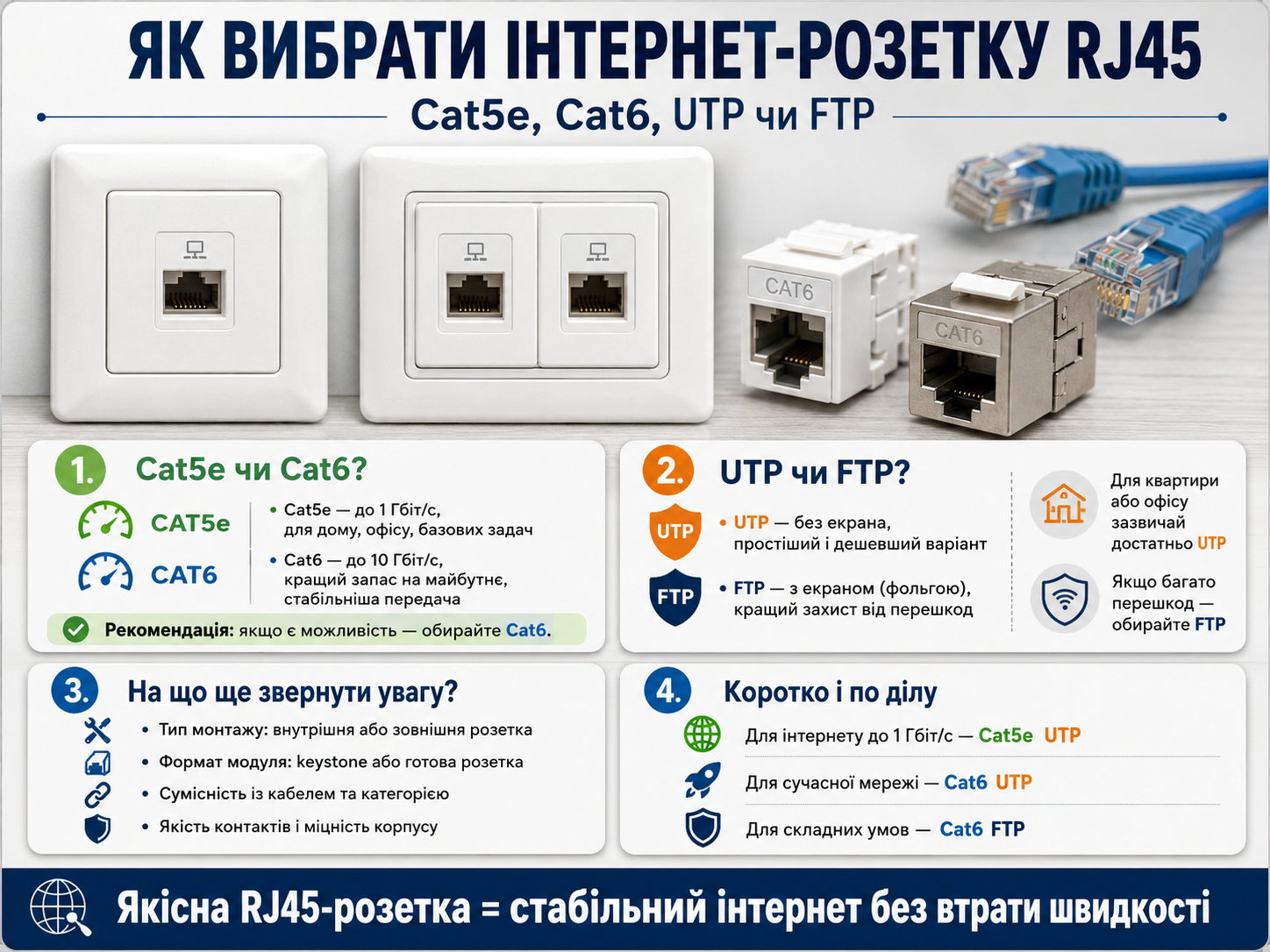
How to Choose an RJ45 Network Socket: Cat5e, Cat6, UTP or FTP
When installing a local area network in a house, apartment, office, server room or video surveillance system, it is important to choose not only the right twisted pair cable, patch cords or RJ45 connectors, but also RJ45 network sockets. A network socket is the final connection point of the cable, through which the user connects a computer, router, TV, IP camera, access point or other network equipment.
At first glance, RJ45 network sockets may look similar, but they differ by purpose, category, shielding type, number of ports, installation method, cable compatibility and module type. If the wrong socket is selected, it may lead to signal loss, unstable internet connection, PoE problems or network speed limitations.
In this article, we will explain how to choose the right RJ45 network socket for Cat5e or Cat6 cable, what the difference is between UTP and FTP sockets, when it is better to choose a socket with a Keystone module, and when a standard network socket is enough.
What Is an RJ45 Network Socket?
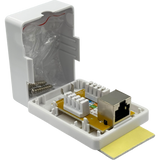
An RJ45 network socket is a network outlet used to connect twisted pair cable to a workstation or network equipment. On one side, the cable installed in the wall, trunking or cable channel is connected to the socket. On the other side, there is an RJ45 port for connecting a patch cord.
Such sockets are used to connect:
- computers and laptops;
- routers and switches;
- Smart TVs and media boxes;
- IP surveillance cameras;
- Wi-Fi access points;
- IP telephony;
- office workstations;
- network equipment in a house or apartment.
The main purpose of an RJ45 network socket is to make the connection neat, convenient and reliable for everyday use.
What Is a Network Socket Used For?
An RJ45 network socket is needed where the cable is installed permanently. For example, if twisted pair cable is installed in a wall or cable channel in an office or house, it is not recommended to leave it with a crimped connector at the end. It is better to install a network socket and then connect equipment to it using a patch cord.
A network socket helps to:
- make the connection neat;
- protect the cable from damage;
- connect and disconnect equipment conveniently;
- avoid frequent bending of the fixed cable;
- simplify network maintenance;
- reduce the risk of poor contact;
- make the installation professional and easy to understand.
For a fixed network, it is better to use the following combination: twisted pair cable + RJ45 network socket + patch cord. This is more convenient and reliable than constantly connecting equipment directly to a cable coming out of the wall.
How Is an RJ45 Network Socket Different from an RJ45 Connector?
Many buyers confuse an RJ45 network socket with a standard RJ45 connector. These are different elements of a network system.
An RJ45 connector is crimped directly onto the end of a cable. It is often used to make patch cords or quickly connect equipment.
An RJ45 network socket is installed in a wall, mounting box, back box or cable channel. It creates a fixed connection point to which a ready-made patch cord is connected.
| Element | Where It Is Used | Feature |
|---|---|---|
| RJ45 connector | At the end of a cable or patch cord | Crimped directly onto the cable |
| RJ45 network socket | In a wall, trunking, back box or workstation | Creates a fixed network connection point |
For temporary connection, an RJ45 connector can be used. For a neat fixed network, it is better to install an RJ45 network socket.
Cat5e or Cat6 — Which Network Socket to Choose?
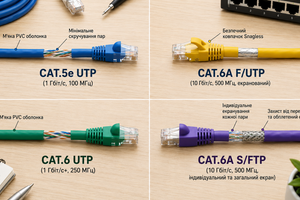
The category of the network socket should match the cable category and network requirements. The most common options are Cat5e and Cat6 sockets.
| Socket Category | Suitable Cable | Where to Use |
|---|---|---|
| Cat5e | Cat5e | Home internet, office networks, standard gigabit connections |
| Cat6 | Cat6 | Offices, new networks, video surveillance, PoE, networks with reserve |
| Cat6A | Cat6A | Server rooms, high-load networks, professional cabling infrastructure |
If you have Cat5e twisted pair cable installed, a Cat5e socket is enough. If you are installing a new network and using Cat6 cable, it is better to choose a Cat6 socket from the beginning.
Important: if Cat6 cable is connected to a Cat5e socket, the entire line may be limited by the weaker component. For a high-quality network, the cable, socket, patch panel and patch cords should preferably match the same category.
You can read more about category differences in the article what is the difference between Cat5e and Cat6.
UTP or FTP Network Socket
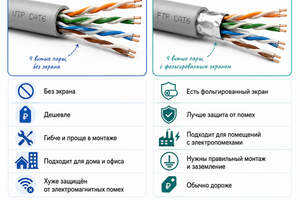
Another important parameter is the shielding type. RJ45 network sockets can be unshielded UTP or shielded FTP/STP.
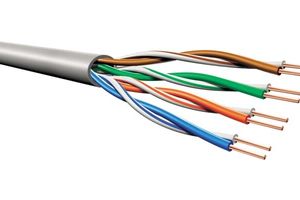
UTP RJ45 socket is used with unshielded twisted pair cable. This is the most common option for apartments, private houses, small offices and standard network connections.
FTP or STP RJ45 socket is used with shielded cable. Such a socket has metal elements or a shielded module that helps properly connect the cable shield and reduce the impact of electromagnetic interference.
| Socket Type | Suitable Cable | When to Choose |
|---|---|---|
| UTP | Unshielded twisted pair | Apartment, house, office, standard installation conditions |
| FTP | Shielded twisted pair | Near power cables, server rooms, technical rooms |
| STP | Shielded cabling systems | Industrial facilities and networks with increased interference protection requirements |
If you have UTP cable installed, a UTP socket is enough. If the cable is FTP, it is better to use an FTP socket or a shielded Keystone module. If a UTP socket is installed on shielded cable, the shielding may not work properly or may not perform its function at all.
You can read more about the difference between cable types in the article what is the difference between UTP and FTP.
Single or Double RJ45 Socket
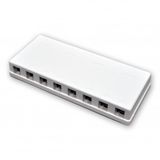
Network sockets can have one or two RJ45 ports. The choice depends on how many devices need to be connected in one place.
A single RJ45 socket is suitable when one device needs to be connected: a computer, TV, router, camera or access point.
A double RJ45 socket is convenient where two devices need to be connected nearby. For example, a computer and IP phone, TV and media box, router and access point.
| Socket Type | When to Choose | Advantage |
|---|---|---|
| Single RJ45 | For one device | Simple and affordable solution |
| Double RJ45 | For two devices in one place | Convenience and reserve for the future |
If during renovation or installation it is possible to run two cable lines to one workstation, it is often better to install a double socket from the beginning. This gives a reserve for future equipment connection.
RJ45 Socket with Keystone Module or Ready-Made Socket
RJ45 network sockets can be ready-made or based on Keystone modules.
A ready-made RJ45 socket already has a built-in network module. This is a simple option for standard installation.
A socket with a Keystone module consists of a frame or housing and a separate RJ45 network module. This option is more flexible because you can separately choose the required module category, shielding type and installation method.
| Solution Type | Advantages | When to Choose |
|---|---|---|
| Ready-made RJ45 socket | Simple choice, quick installation | For standard home and office connections |
| Socket with Keystone module | Flexibility, module selection, easy replacement | For professional installation, offices, server rooms and networks with different requirements |
If you need a high-quality and flexible system, it is better to consider solutions with Keystone modules. You can read more about them in the article how to choose an RJ45 Keystone module.
Internal, External or Surface-Mount RJ45 Socket
By installation method, sockets can be internal, external or surface-mounted. The choice depends on how the cable is installed and where the connection point will be placed.
An internal RJ45 socket is installed into a back box inside the wall. This is a neat solution for apartments, houses, offices and renovated rooms.
An internal surface-mount socket is mounted on the wall surface indoors. It is convenient if the cable is installed openly, in cable trunking, or when it is not possible to install a back box.
An external surface-mount socket is used for surface installation where a quick connection or a more protected solution for technical areas is required.
| Installation Type | Where to Use | Feature |
|---|---|---|
| Internal socket | Apartment, house, office, renovation | Neat concealed installation in a back box |
| Internal surface-mount socket | Cable channels, offices, technical rooms | Surface installation without wall chasing |
| External surface-mount socket | Technical areas, warehouses, open installation | Convenient solution for quick or surface installation |
For residential and office premises, internal installation is most often chosen. For warehouses, technical rooms or quick network expansion, surface-mount solutions are often used.
What RJ45 Sockets Can Be Selected at Net-Server?
The Net-Server catalog includes different solutions for network, telephone and power connections. For local networks, RJ45 network sockets are most often used. They are suitable for connecting computers, routers, IP cameras, access points and other network equipment.
For easier selection, you can focus on the following socket types:
- RJ45 network sockets — for connecting twisted pair cable, patch cords and network equipment;
- RJ11/RJ12 telephone sockets — for telephone lines, fax machines and analog communication;
- internal surface-mount sockets — for surface installation inside premises;
- external surface-mount sockets — for open installation and technical areas;
- 220V power sockets — for connecting electrical appliances and organizing power supply.
For network connections, pay attention to the socket category Cat5e or Cat6, shielding type UTP or FTP/STP, number of ports 1xRJ45 or 2xRJ45, and installation type — internal, surface-mounted or Keystone-based solution.
Network Socket for Home Use
For home use, a Cat5e or Cat6 UTP network socket is usually enough. If you have regular home internet, Smart TV, computer or router, a Cat5e socket is often sufficient.
If you are installing a new network during renovation, it is better to consider Cat6. This gives more reserve for the future and is better suited for modern equipment.
For home use, people usually choose:
- single or double RJ45 socket;
- Cat5e or Cat6;
- UTP version;
- internal installation in a back box or surface-mount installation;
- a patch cord of the required length for connecting equipment.
If power cables run near the network cable or there is a risk of interference, you can consider FTP cable and a compatible FTP socket.
Network Socket for an Office
In an office, network sockets are used to connect workstations, IP phones, printers, access points, cameras and other equipment.
For an office network, it is better to plan connection reserve from the beginning. For example, one workstation often gets not one but two network lines.
For offices, the following is usually recommended:
- Cat5e or Cat6 sockets;
- double RJ45 sockets for workstations;
- UTP or FTP depending on the installed cable;
- quality Keystone modules or reliable ready-made sockets;
- line labeling for easier maintenance;
- connection of cables to a patch panel in a server cabinet.
Proper socket organization in an office makes employee connection, equipment replacement and future network expansion easier.
Network Socket for Video Surveillance and PoE
In video surveillance systems, RJ45 network sockets can be used for neat IP camera connection, especially indoors or in technical areas.
If the camera works via PoE, the cable, socket, module and patch cord must be high quality. PoE transmits not only data but also power, so poor contact may cause voltage loss, unstable camera operation or heating of the connection.
For video surveillance and PoE, it is better to use:
- copper Cat5e or Cat6 twisted pair cable;
- a socket of the appropriate category;
- an FTP socket if shielded cable is used;
- a quality patch cord for connecting the camera;
- line testing after installation.
You can read more about cable selection for cameras in the article which cable to choose for video surveillance, and about PoE in the article which cable to choose for PoE.
What to Consider When Choosing an RJ45 Network Socket
Before buying an RJ45 network socket, pay attention to several important parameters.
- Category — Cat5e, Cat6 or Cat6A should match the cable and network requirements.
- Shielding type — UTP for unshielded cable, FTP or STP for shielded cable.
- Number of ports — single or double socket.
- Installation type — internal, internal surface-mount or external surface-mount socket.
- Keystone compatibility — if flexibility and module replacement are required.
- Contact quality — important for stable signal and PoE.
- Cable termination convenience — tool-based or toolless mechanism.
- Usage conditions — home, office, server room, video surveillance or PoE.
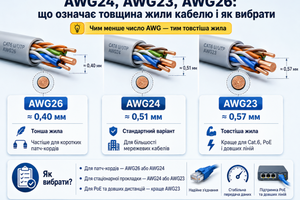
If Cat6 cable with a thicker conductor is used, make sure that the module or socket supports the required conductor diameter.
Common Mistakes When Choosing and Installing an RJ45 Socket
- choosing a socket of a lower category than the cable;
- using a UTP socket with shielded FTP cable;
- incorrect T568A or T568B wiring scheme;
- poorly inserted conductors into contacts;
- not testing the line with a cable tester;
- installing a single socket where a double one would be better;
- saving money on sockets for PoE or critical networks;
- not labeling cable lines in an office;
- confusing RJ45 network sockets, telephone sockets and power sockets.
Most network problems are often caused not by the cable itself, but by incorrect installation, weak contact or mismatch between components.
What Products Are Used Together with RJ45 Network Sockets?
For quality network installation, the following products are often used together with RJ45 network sockets:
- RJ45 network sockets — for organizing connection points;
- RJ45 network sockets — for connecting twisted pair cable and network equipment;
- RJ45 network modules — for sockets, patch panels and Keystone solutions;
- twisted pair cable — for installing network lines;
- patch cords — for connecting equipment to a socket;
- RJ45 connectors — for crimping cable and creating connections;
- crimping tools — for quality installation of network connections;
- patch panels — for organizing cable lines in a server room or cabinet.
Properly selected components help create a stable, neat and easy-to-maintain network.
FAQ
Which RJ45 network socket should I choose for home use?
For most home connections, a Cat5e or Cat6 UTP RJ45 socket is enough. If you are installing a new network with future reserve, it is better to choose Cat6.
Cat5e or Cat6 socket — which is better?
Cat5e is suitable for most standard gigabit connections. Cat6 provides better stability reserve and is better suited for new networks, offices, PoE and modern equipment.
UTP or FTP RJ45 socket — which should I choose?
UTP is suitable for unshielded cable and standard conditions. FTP should be used with shielded cable or where there is a risk of electromagnetic interference.
Can FTP cable be connected to a UTP socket?
Physically, it may sometimes be possible, but it is not recommended. In this case, the shielding may work incorrectly or may not perform its function at all.
Is a single or double RJ45 socket better?
If you need to connect one device, a single socket is enough. If possible, for a workstation or office it is better to provide a double socket with reserve.
Is an RJ45 network socket suitable for PoE?
Yes, but the socket must be high quality, of the correct category and properly connected. For PoE, contact quality and correct installation are especially important.
How is an RJ45 network socket different from a telephone socket?
An RJ45 network socket is used for internet and local networks, while an RJ11/RJ12 telephone socket is used for telephone lines. They have different purposes, so it is important to choose the correct socket type before buying.
Useful Categories
- RJ45 Network Sockets
- RJ45 Network Sockets
- Telephone Sockets
- Internal Surface-Mount Sockets
- External Surface-Mount Sockets
- 220V Power Sockets
- RJ45 Network Modules
- Twisted Pair Cable
- Patch Cords
- RJ45 Connectors
Useful Articles
- What Is the Difference Between Cat5e and Cat6
- What Is the Difference Between UTP and FTP
- How to Choose an RJ45 Keystone Module
- How to Choose an RJ45 Connector
- How to Choose a Patch Cord
- How to Choose a Patch Panel
- Which Cable to Choose for PoE
Conclusion
To choose the right RJ45 network socket, you need to consider the cable category, shielding type, number of ports, installation method and network usage conditions.
For home internet, a Cat5e or Cat6 UTP socket is usually enough. For offices, PoE, video surveillance and networks with future reserve, Cat6 is a better choice. If shielded cable is used, an FTP/STP socket or a compatible Keystone module should be installed.
In the Net-Server catalog, you can choose RJ45 network sockets, telephone sockets, surface-mount and power solutions for different installation tasks. The main thing is to correctly define the connection type, cable category and installation method.
Need help choosing an RJ45 network socket? Net-Server specialists will help you select network sockets, RJ45 modules, twisted pair cable, patch cords and other components for stable network operation.