 zakaz@net-server.com.ua

Copper Cable or Bimetallic CCA Cable: What Is the Difference and Which One Is Better to Choose
When choosing a network cable for the Internet, video surveillance or a local area network, many buyers face the question: which is better — copper cable or bimetallic CCA cable? At first glance, they look almost the same, but there is a significant difference between them that affects signal stability, PoE support, durability and the overall quality of the network.
The conductor material is one of the most important parameters when choosing twisted pair cable, patch cords or cable for video surveillance. It affects data transmission quality, the ability to transmit power over Ethernet and the reliability of equipment connection.
In this article, we will explain in simple words what copper cable is, what CCA means, how copper differs from bimetallic cable and which option is better for the Internet, cameras, PoE and local networks.
What Is Copper Cable
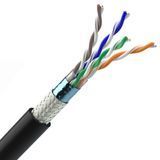
Copper cable is made with conductors of pure copper. This type of cable is used in professional local networks, video surveillance systems, offices, server rooms and other facilities where stability and durability are important.
Main advantages of copper cable:
- high electrical conductivity;
- minimal signal loss;
- stable operation over long distances;
- full PoE support;
- long service life.
That is why copper cable is recommended for critical networks where reliability and stable data transmission are important.
What Is Bimetallic CCA Cable
CCA stands for Copper Clad Aluminum. It is an aluminum conductor covered with a thin layer of copper. That is why this type of cable is often called bimetallic cable or copper-clad aluminum cable.
Externally, CCA cable can look very similar to copper cable, but inside it has an aluminum core. This is why its characteristics differ from pure copper cable.
The main advantage of CCA cable is its lower cost. Such cable can be used in simple budget solutions where there are no high loads, long cable runs or PoE power transmission.
However, it is important to understand that bimetallic cable has higher resistance, transmits power worse, heats up more and is less durable.
Main Difference Between Copper Cable and CCA
The main difference is the conductor material. Copper cable is made of pure copper, while CCA is made of aluminum covered with a thin layer of copper.
The conductor material affects:
- electrical conductivity;
- signal loss;
- cable heating;
- PoE support;
- mechanical strength;
- service life.
Comparison of Copper Cable and CCA
| Parameter | Copper Cable (CU) | Bimetallic Cable (CCA) |
|---|---|---|
| Conductor material | Pure copper | Aluminum with copper coating |
| Electrical conductivity | High | Lower |
| Signal loss | Minimal | Higher |
| Heating | Lower | Higher |
| PoE support | Full | Limited |
| Mechanical strength | Higher | Lower |
| Service life | Longer | Shorter |
| Cost | Higher | Lower |
Why Copper Cable Is Better for PoE
PoE (Power over Ethernet) allows power and data to be transmitted through a single cable. This technology is often used for IP cameras, Wi-Fi access points and other network equipment.
For PoE, conductor quality is extremely important. Copper cable has lower resistance, so it transmits power better, heats up less and ensures stable equipment operation.
Using CCA cable for PoE is not recommended, especially if:
- the cable run is long;
- powerful IP cameras are used;
- Wi-Fi access points are connected;
- equipment works 24/7;
- stable power transmission is required.
When using bimetallic cable, voltage drops, cable overheating, camera reboots and unstable network operation may occur.
Which Cable Is Better for the Internet
For simple home Internet over short distances, bimetallic CCA cable can sometimes work normally. But if you need stable speed, a gigabit connection or a reserve for the future, it is better to choose copper cable.
Copper cable is better suited for:
- gigabit Internet;
- router connections;
- office networks;
- network equipment;
- long cable runs;
- systems that must work without failures.
If you do not want to redo the network after a few months, it is better to use high-quality twisted pair cable with copper conductors from the start.
Copper or CCA for Video Surveillance
For video surveillance systems, stable signal and power transmission are especially important. Most modern IP cameras work via PoE, so the cable must meet higher requirements.
For video surveillance, it is better to use copper cable, especially if:
- cameras are installed at a long distance;
- PoE is used;
- the system works 24/7;
- there are many cameras;
- stable video transmission without freezes is required.
More information about choosing cable for cameras can be found in the article which cable to choose for video surveillance.
Where CCA Cable Can Be Used
Bimetallic CCA cable can be a budget solution for simple conditions.
It can be considered for:
- short cable lines;
- temporary connections;
- simple home networks without PoE;
- situations where the main factor is the lowest price.
But for critical networks, video surveillance systems, PoE and office infrastructure, it is better not to save on the conductor material.
Which Products Are Used Together with Network Cable
For installation and connection of network cable, the following products are often additionally used:
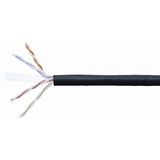
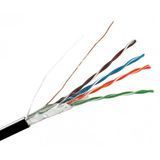
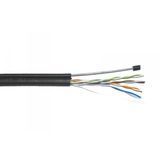
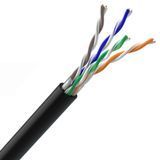
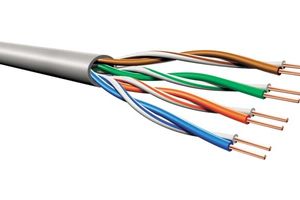
- twisted pair cable — for building local networks, connecting equipment and laying cable lines;
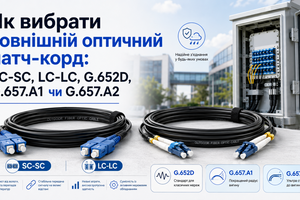
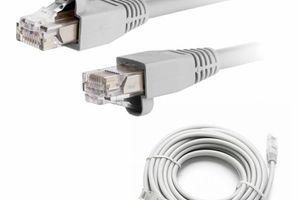
- patch cords — for connecting routers, patch panels, network equipment and workplaces;
- RJ45 connectors — for crimping cable and creating a reliable network connection;
- crimping tools — for professional installation of RJ45 connectors;
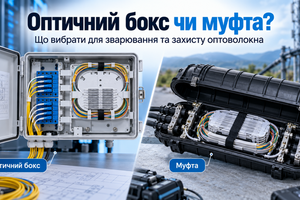
- cable junction boxes — for connecting, repairing or extending a cable line.
Properly selected accessories help avoid signal loss, poor contact, cable breaks and unstable network operation.
Typical Mistakes When Choosing Cable
- focusing only on the lowest price;
- using CCA cable for PoE cameras;
- ignoring the conductor material;
- choosing cable without considering the line length;
- using low-quality connectors;
- saving on crimping tools;
- joining cable without reliable installation solutions.
FAQ
What Does CCA Mean in Cable?
CCA means Copper Clad Aluminum. It is an aluminum conductor covered with a thin layer of copper.
Which Is Better — Copper Cable or CCA?
Copper cable is better in most parameters: it is more stable, more durable, supports PoE better and has lower signal loss.
Can CCA Be Used for PoE?
For PoE, it is better to use copper cable. CCA can work unstably because of higher resistance and voltage loss.
Why Is CCA Cheaper?
CCA is cheaper because aluminum is used inside, while copper is present only as a thin coating.
How to Identify Copper Cable or CCA
In most cases, manufacturers of bimetallic cable clearly indicate the CCA marking in the specifications or on the cable jacket.
Copper cable often does not have a special CU marking, because the use of copper is standard for high-quality cable products.
If you strip the cable conductor, the cut of a copper conductor will be fully copper-colored. In CCA cable, the outer layer will be copper-colored, while a silver-colored aluminum core will be visible inside.
Bimetallic cable is also usually lighter in weight compared to a similar cable made of pure copper.
Useful Categories
Useful Articles
- What Is the Difference Between Cat5e and Cat6
- What Is the Difference Between UTP and FTP
- How to Crimp an RJ45 Cable
- Which Cable to Choose for Video Surveillance
Conclusion
If you need maximum reliability, stable data transmission speed, PoE support and a long service life, it is recommended to use copper cable. It is more expensive, but it provides better signal quality, lower losses and stable operation of network equipment.
Bimetallic CCA cable can be a budget solution for short lines and simple home networks without high loads. However, for video surveillance, PoE, office networks and critical facilities, pure copper cable remains the best choice.
Need help choosing a network cable? Net-Server specialists will help you choose twisted pair cable, patch cords, RJ45 connectors and other components for building a reliable network. We will help you select the best solution for your tasks and budget.