 zakaz@net-server.com.ua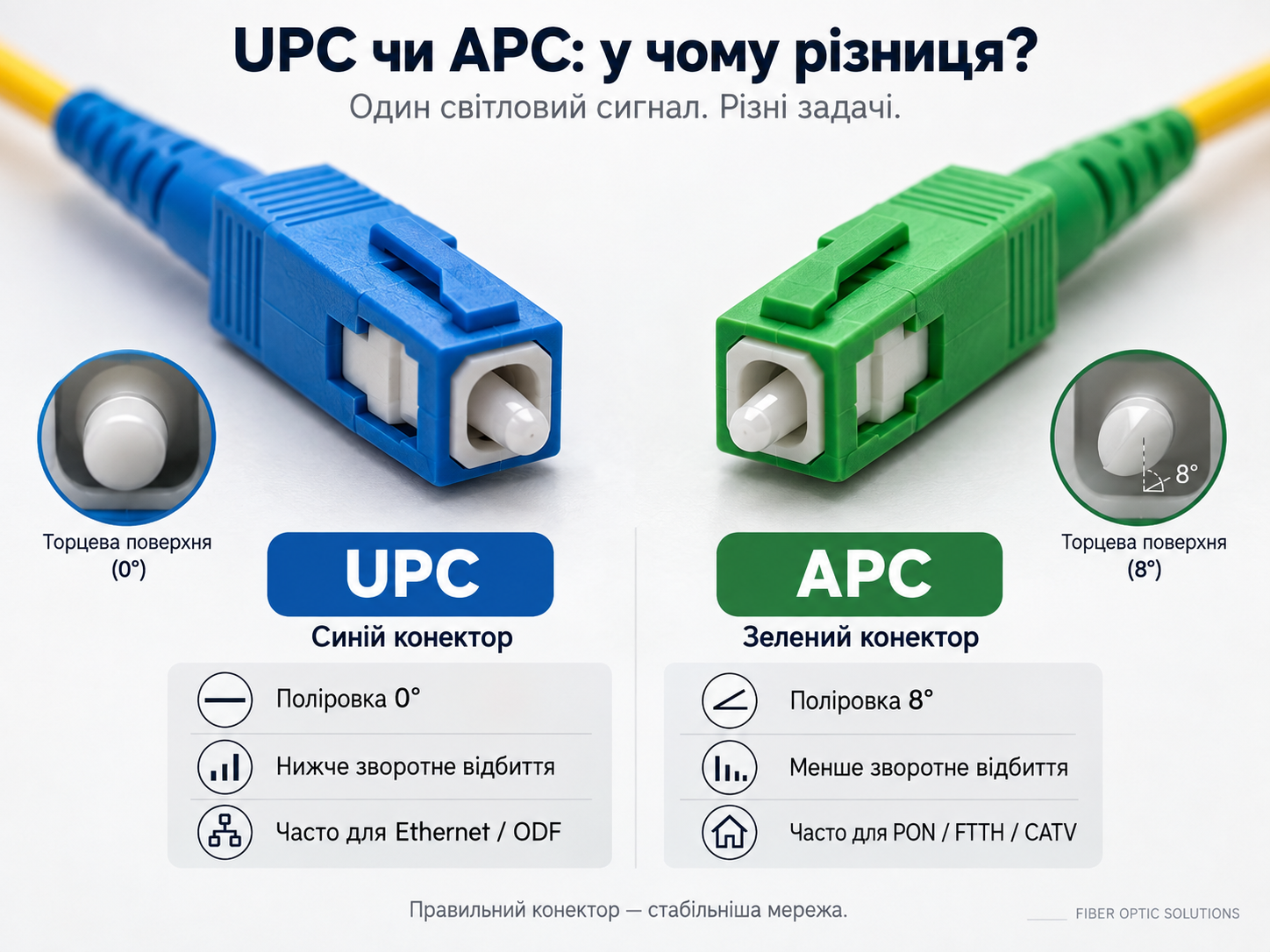
UPC or APC: What Is the Difference Between Blue and Green Fiber Optic Connectors
When choosing a fiber optic patch cord, pigtail or adapter, it is important to pay attention not only to the connector type — SC, LC, FC or ST — but also to the connector polishing type. Most often, customers see the markings UPC or APC and identify them by color: a blue connector usually means UPC, while a green connector usually means APC.
At first glance, the difference may seem minor, but in practice, choosing the wrong type can lead to higher signal loss, unstable optical line operation or connection problems with equipment. This is especially important for PON, GPON, FTTH, optical boxes, patch panels, SFP modules and media converters.
In this article, we will explain the difference between UPC and APC, what blue and green fiber optic connectors mean, when to choose SC/UPC, SC/APC, LC/UPC or LC/APC, and why different polishing types should not be mixed in one connection.
What Is Fiber Optic Connector Polishing
Fiber optic connector polishing is the way the end face of the ferrule is processed. The optical fiber passes through this ferrule, and through this end face the light signal passes from one connector to another connector, adapter, patch panel or device.
The quality and type of polishing affect:
- signal loss level;
- back reflection of light;
- stability of the optical line;
- compatibility with adapters and equipment;
- quality of PON/GPON/FTTH network operation;
- correct connection of patch cords and pigtails.
The most common polishing types in modern fiber optic networks are UPC and APC.
UPC and APC in Simple Words
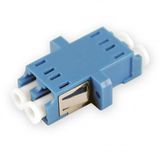
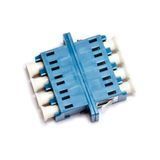
UPC is a polishing type with a flat connector end face. These connectors are most often blue and are used in many standard fiber optic connections.
APC is an angled polishing type. These connectors are usually green. Thanks to angled polishing, APC reduces signal back reflection better, so it is often used in PON, GPON, FTTH and other networks where optical signal stability is important.
| Polishing Type | Connector Color | Feature | Where It Is Used |
|---|---|---|---|
| UPC | Blue | Flat end-face polishing | Standard fiber optic connections, SFP modules, media converters, patch panels |
| APC | Green | Angled end-face polishing | PON, GPON, FTTH, subscriber lines, optical boxes |
Blue and Green Connectors: What Is the Difference
In most cases, the connector color helps quickly identify the polishing type:
- blue connector usually means UPC;
- green connector usually means APC.
However, choosing only by color is not always correct. Before buying, always check the full product marking: for example, SC/UPC, SC/APC, LC/UPC or LC/APC.
The main difference between blue and green connectors is not the color, but the geometry of the end face. UPC has a flat polished end face, while APC is polished at an angle. Because of this, APC reduces back reflection more effectively.
What UPC Means
UPC stands for Ultra Physical Contact. It is an improved type of flat polishing that provides good physical contact between two fiber optic connectors.
UPC connectors are often used in standard optical networks where there are no very strict requirements for back reflection. They are suitable for many tasks in local networks, server rooms, telecommunication cabinets, SFP module connections, media converters and optical patch panels.
UPC should be chosen if:
- the equipment has a UPC port or UPC adapter;
- a standard fiber optic patch cord is required;
- LC/UPC or SC/UPC connection is used;
- the optical line is not part of a PON/GPON network with APC infrastructure;
- blue UPC adapters or patch panels are already installed.
What APC Means
APC stands for Angled Physical Contact. This is a polishing type where the connector end face is polished at an angle. As a result, part of the reflected light does not return directly back into the fiber but is directed away at an angle.
APC connectors are usually green. They are often used in PON, GPON, FTTH, subscriber connections, optical boxes, splitters and lines where reducing signal back reflection is important.
APC should be chosen if:
- green APC adapters are already installed;
- the equipment or optical box has an SC/APC port;
- connection is required in a PON/GPON/FTTH network;
- optical splitters are used;
- minimal signal back reflection is important;
- APC is directly specified in the technical requirements.
UPC or APC: Main Differences
| Parameter | UPC | APC |
|---|---|---|
| Color | Blue | Green |
| Polishing type | Flat end face | Angled end face |
| Back reflection | Higher than APC | Lower than UPC |
| Where it is more often used | Optical patch panels, SFP, media converters, standard connections | PON, GPON, FTTH, optical boxes, splitters |
| Compatibility | Should be connected with UPC | Should be connected with APC |
| Typical markings | SC/UPC, LC/UPC, FC/UPC | SC/APC, LC/APC, FC/APC |
The main rule is simple: UPC should be connected to UPC, and APC should be connected to APC. If polishing types are mixed, the connection may work worse and create additional losses.
Why UPC and APC Should Not Be Mixed
UPC and APC have different end-face geometry. If a blue UPC connector is connected to a green APC connector, the contact between them will be incorrect. This may increase attenuation, cause signal instability or even damage the connector end faces.
It is not recommended to connect:
- SC/UPC with SC/APC;
- LC/UPC with LC/APC;
- UPC patch cord with APC adapter;
- APC pigtail with UPC port;
- blue connector with green connector without checking compatibility.
If a green SC/APC adapter is installed in the optical box, an SC/APC patch cord or pigtail should be used. If a blue SC/UPC or LC/UPC adapter is installed in the patch panel, UPC components should be selected.
SC/UPC, SC/APC, LC/UPC, LC/APC: What These Markings Mean
In the marking of fiber optic components, two parameters are usually indicated at once: connector type and polishing type.
| Marking | Meaning | Where It Is Used |
|---|---|---|
| SC/UPC | SC connector with blue UPC polishing | Patch panels, media converters, standard optical connections |
| SC/APC | SC connector with green APC polishing | PON, GPON, FTTH, optical boxes, subscriber lines |
| LC/UPC | LC connector with blue UPC polishing | SFP modules, media converters, equipment with LC ports |
| LC/APC | LC connector with green APC polishing | Optical networks where LC connection with APC polishing is required |
For example, if the description says SC-SC UPC, it means that SC connectors with UPC polishing are installed on both ends of the patch cord. If it says SC/APC-SC/APC, both ends have green APC connectors.
What to Choose for PON, GPON and FTTH
For PON, GPON and FTTH networks, APC polishing is very often used, especially in SC/APC format. This is because low back reflection and optical signal stability are important in such networks.
For subscriber connections, the following are often used:
- SC/APC patch cords;
- SC/APC pigtails;
- SC/APC adapters;
- optical boxes with APC adapters;
- splitters with APC connectors.
If you are connecting a subscriber line, ONU/ONT, optical box or PON network, check which polishing type is already used in the system. If it uses green APC components, APC should be selected.
What to Choose for an SFP Module or Media Converter
For SFP modules and media converters, LC/UPC or SC/UPC is often used, but it depends on the specific equipment. Before buying, check which connector type and polishing type are specified in the device characteristics.
For connection to an SFP module, usually check:
- connector type — LC or SC;
- fiber type — singlemode or multimode;
- Simplex or Duplex;
- UPC or APC;
- patch cord length;
- compatibility with a patch panel or optical box.
The most common mistake is choosing the correct connector type but the wrong polishing type. For example, buying SC/UPC instead of SC/APC or the other way around.
What to Choose for an Optical Box or Patch Panel
Optical boxes and patch panels often already have adapters installed. Patch cords and pigtails should be selected according to these adapters.
Before buying, check:
- what color the installed adapters are — blue or green;
- what marking is indicated on the adapter;
- whether it is SC or LC;
- whether it is UPC or APC;
- what fiber type is used;
- whether a Simplex or Duplex patch cord is needed.
If the box has green adapters, APC components are most often needed. If the adapters are blue, UPC components are most often needed. But it is better to check not only the color, but also the marking.
UPC/APC and Fiber Type: Is There a Connection?
UPC or APC is the polishing type of the connector, while G.652D, G.657.A1, G.657.A2, OM3 or OM4 is the fiber type. These are different characteristics and should not be confused.
For example, a patch cord can be:
- SC/UPC, singlemode G.652D;
- SC/APC, singlemode G.657.A1;
- LC/UPC, singlemode G.657.A2;
- LC-LC UPC, multimode OM3;
- SC-SC APC, outdoor FTTH.
So first you need to define the fiber type and task, and then choose the connector type and polishing type.
How Not to Make a Mistake When Buying a Patch Cord
Before buying a fiber optic patch cord or pigtail, it is important to check not just one parameter, but the full combination of characteristics.
Pay attention to:
- connector type — SC, LC, FC or ST;
- polishing type — UPC or APC;
- fiber type — singlemode or multimode;
- fiber standard — G.652D, G.657.A1, G.657.A2, OM3, OM4;
- number of fibers — Simplex or Duplex;
- cable length;
- outdoor or indoor design;
- compatibility with adapter, optical box, patch panel or equipment.
If you are unsure, the simplest rule is to look at what is already installed. If you have a green adapter, APC is most likely needed. If it is blue, UPC is most likely needed. But for an accurate choice, it is better to check the marking or equipment specifications.
Common Mistakes When Choosing UPC or APC
- buying a blue UPC patch cord for a green APC adapter;
- confusing SC/UPC and SC/APC;
- choosing only by color without checking the marking;
- selecting the correct connector but the wrong polishing type;
- mixing UPC and APC in one line;
- not considering PON/GPON equipment requirements;
- buying LC/UPC instead of LC/APC or vice versa;
- not checking the adapter type in the optical box;
- ordering pigtails and patch cords with different polishing types;
- not considering the already installed infrastructure.
Such mistakes can lead to additional losses, unstable signal or the need to buy the correct patch cords, adapters or pigtails again.
What Products Are Bought Together with UPC/APC Patch Cords
For correct optical line connection, the following products are often ordered together with UPC or APC patch cords:
- fiber optic patch cords — for connecting equipment, patch panels, boxes and adapters;
- outdoor fiber optic patch cords — for outdoor or protected installation;
- fiber optic pigtails — for splicing with line cable;
- fiber optic adapters — for connecting SC, LC, FC or ST connectors;
- fiber optic boxes — for protecting and organizing optical connections;
- fiber optic patch panels — for installing fiber optics in server cabinets;
- SFP modules — for connecting optical lines to network equipment;
- media converters — for converting fiber optic connection to Ethernet.
The main rule is to choose all components of one line as compatible: if APC is used, the patch cord, adapter and pigtail should also be APC. If UPC is used, choose UPC components.
FAQ
What Is UPC in a Fiber Optic Connector?
UPC is a type of flat polishing for a fiber optic connector. These connectors are usually blue and are used in many standard fiber optic connections.
What Is APC in a Fiber Optic Connector?
APC is a type of angled polishing for a fiber optic connector. These connectors are usually green and are often used in PON, GPON, FTTH and subscriber fiber optic networks.
What Is the Difference Between a Blue and Green Connector?
A blue connector most often means UPC polishing, while a green connector means APC polishing. The main difference is not the color, but the end-face shape: UPC has a flat end face, while APC has an angled end face.
Can UPC and APC Be Connected Together?
It is not recommended. UPC and APC have different end-face geometry, so connecting them may cause additional losses, signal instability or connector damage.
Which Is Better: UPC or APC?
One option is not always better than the other. You should choose the polishing type that matches your equipment, adapters and existing optical line. APC is often used for PON/GPON, while UPC is often used for standard connections.
What Should I Choose for GPON — UPC or APC?
For GPON and FTTH, APC is very often used, especially SC/APC. But before buying, check which connectors and adapters are already installed in your network.
How Do I Know Which Patch Cord I Need?
Check the connector type, adapter color, equipment marking, UPC/APC polishing type, fiber type and cable length. If the adapter is green, APC is most often needed; if it is blue, UPC is most often needed.
Does UPC or APC Affect Internet Speed?
The polishing type itself does not “increase speed”, but the wrong UPC/APC choice can reduce signal quality, increase losses and cause stability problems in the optical line.
Useful Articles
- How to Choose an Outdoor Fiber Optic Patch Cord
- What Is the Difference Between OM2, OM3, OM4 and Singlemode
- What Is an SFP Module and How to Choose It
- How to Connect Fiber Optic Cable to a Computer
- How to Choose a 19-Inch Server Cabinet
Conclusion
UPC and APC are two different polishing types for fiber optic connectors. UPC is usually blue and has flat end-face polishing, while APC is green and has angled polishing. The main difference between them is the level of back reflection and the area of application.
UPC is often used for standard fiber optic connections, SFP modules, media converters and many patch panels. APC is often used for PON, GPON, FTTH, optical boxes and splitters.
The most important rule is: do not mix UPC and APC without need. The patch cord, adapter, pigtail and equipment must be compatible with each other. If you have a green APC adapter, choose APC components. If you have a blue UPC adapter, choose UPC components.
Need help choosing a fiber optic patch cord or adapter? Net-Server specialists will help you choose an SC/UPC, SC/APC, LC/UPC or LC/APC patch cord, pigtail, adapter, optical box or other components for your fiber optic network.